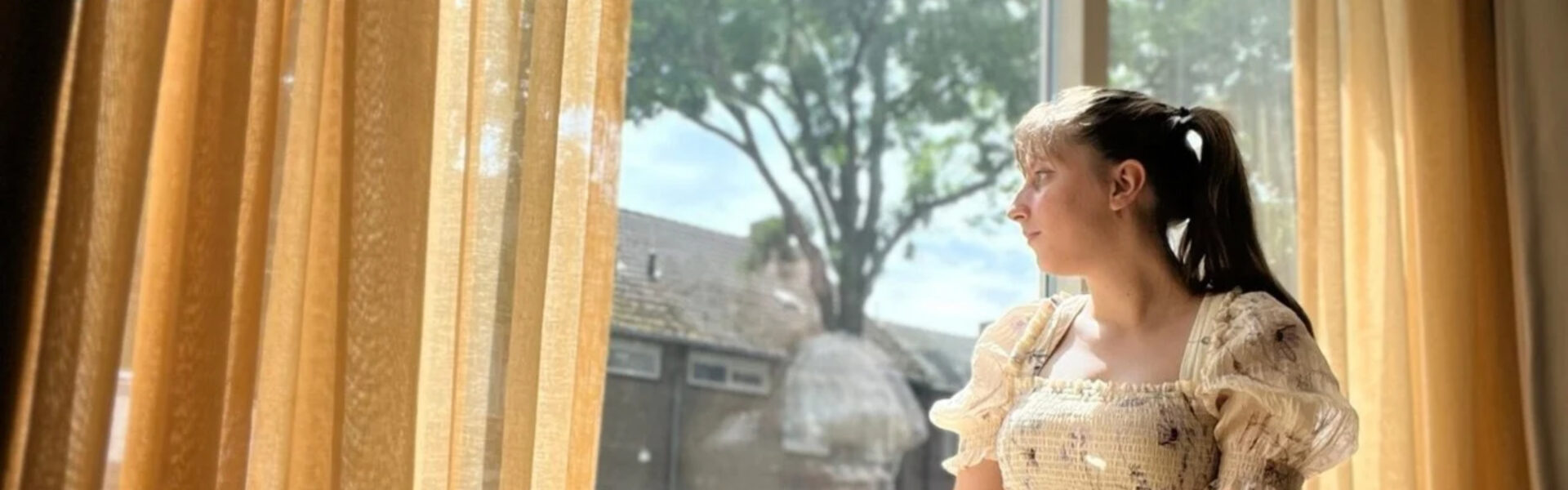
A good translation plays a deciding role in how storytelling is experienced. The human centered craft, however, has been put under pressure by AI and other translation tools for the last couple of years. That AI in 2026 or beyond is not at a point where it can replace a human translator doesn’t seem to matter unfortunately. At Translation Agency Perfect we thought it was high time to celebrate one of our translators for this year's #dayofthetranslator. Meet Bruna Carvalho, a Brazilian translator who has been providing Brazilian Portuguese and English translations for the past four years from her home office in Eindhoven, Netherlands.
When did you know that you wanted a career in translation?
Bruna: I’ve been fascinated with language and translation for as long as I can remember. When i was twelve, I started learning English and quickly noticed that it didn’t even really feel like learning. Which probably helped with gaining my current fluency. Besides this, I've also been interested in people and what makes them tick, and this interest has guided the educational decisions, and career moves I've made so far. I, for example, also have a degree in psychology and was fully planning on becoming a mental health professional, before realizing that the daily tasks and responsibilities within this profession might prove to be harder for an introvert like me. By pivoting towards a career in translation, I can still spend my days telling stories along with connecting and supporting people, just in a way that works better for me.
Do you have any advice for people wanting to become a translator in this post-AI age?
Bruna: This position our industry has been in is unfortunately not anything new. When I started four years ago, it was already challenging to find assignments. I do wholeheartedly believe that if you really want this career, you can still make it work and find a way. What personally helped me a lot was becoming active on LinkedIn and building relationships with industry peers who could help me along. Another important piece of the puzzle is knowing who your client is. Once you know that, you can reach out to them. I, for example, am specialized in the localization of games and software, so I attend the annual GamesCom in Cologne to of course have fun with likeminded people but also find potential clients and collaborations.
Lastly, i think you can differentiate yourself from AI and other free tools by offering premium services. That extra check, feedback round, or quality guarantee might give a potential client that extra push needed to invest in a human translator. By promoting these services, you will also attract clients who care deeply about their written content and don’t just see translations as something to check off the to-do list.
How does localization work in a gaming context?
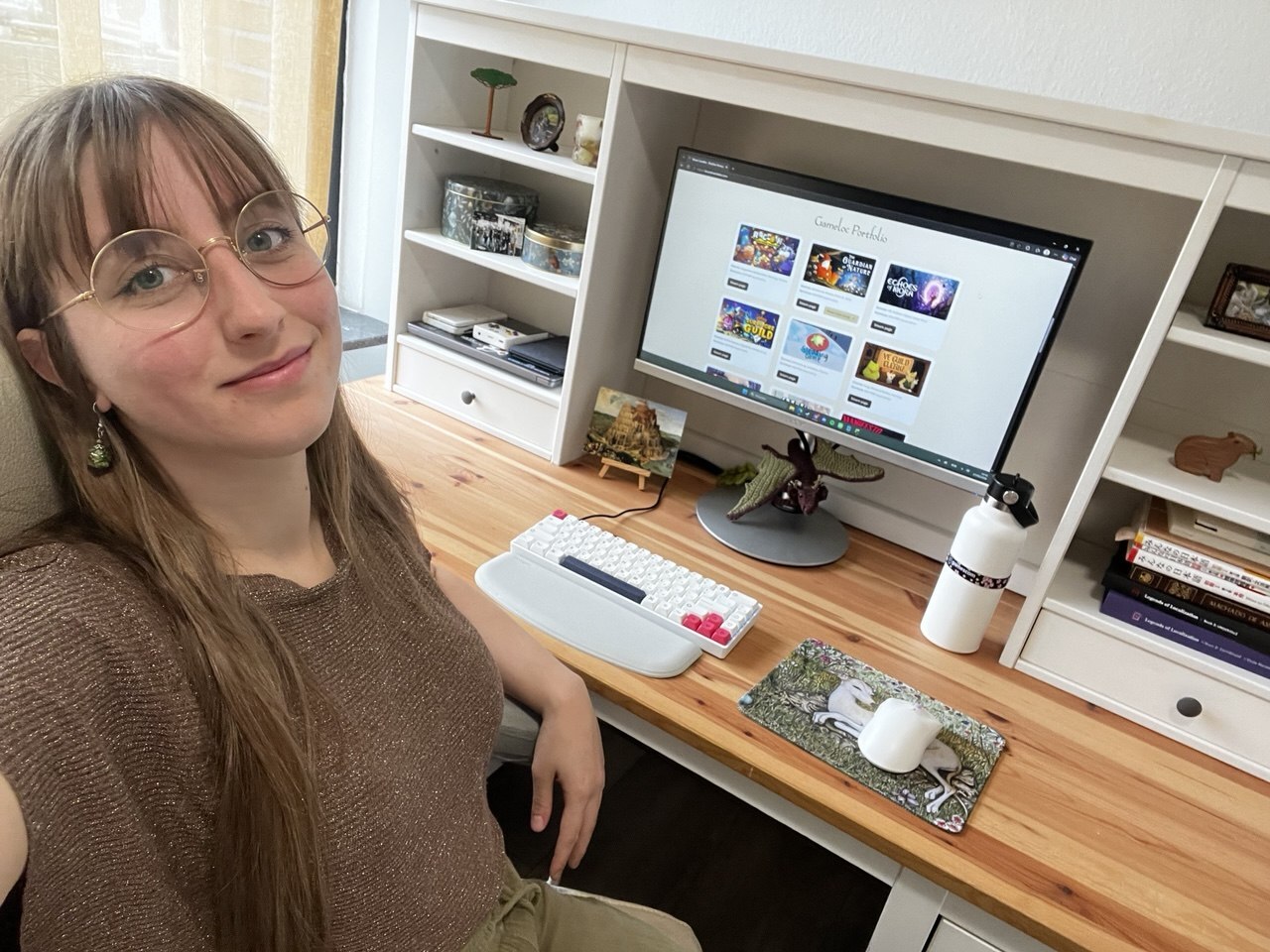
Bruna: I suspect that whenever people think of a professional translation, they first think of books or other printed material, which isn’t necessarily my niche, even though it sounds nice to do. Whenever you are localizing a text, there generally speaking are a lot more creative liberties that can be taken. You really need to know how to break the rules. Whenever I am translating a game, I usually am responsible for making the dialogue work. Something I think is very fun but can be challenging if you don’t know how Brazilians and English people converse in real life and know how to convey that. If you fail this part of the assignment, players of the game will immediately feel less immersed in the fictional world that was created, which you of course don’t want as a game developer. One of my favourite projects in this regard was the Guardian of Nature, a cozy game where all information and dialogue had to be fully rhymed. These are the types of challenges I love to figure out.
One issue you often run into with translation, is that languages rarely fit neatly in a box. Sentences in Brazilian Portuguese are usually around 25% longer than an average English sentence. It simply takes more or longer words to express the same concept. Which is fine, as long as you don’t have limited space because it needs to fit on a button or something along those lines. To make something like that work, you need to pick a word that not only fits best for that translation whilst at the same time not exceeding a character limit.
In my experience, gamers can always tell when the localization of their game was automated. People want quality, specificity and nuance, and AI is simply not at the point where they can provide that in a translation. Words have feelings after all, and you have to know how you can transmit those feelings to your audience. To ensure that I can provide my clients with an output I can be proud of, I try to directly communicate with my clients regarding the style and atmosphere they’re after.
What was it like to relocate to and start over in the Netherlands?
Bruna: The first year was very challenging to be honest. I don’t think you can ever be fully prepared for being so far away from all your friends and family. It definitely took a lot of time for me to adjust to this new reality. It still hurts to see my parents, nephews, and nieces become visibly older whenever I go back to visit them. This doesn’t mean I regret moving here. I think I grew from this move both as a human and as a translator, in ways I couldn’t have done if I had stayed in Brazil.
I also think it's important for a translator to be curious and knowledgeable about different cultures and explore these different ways of living together all over the world. The fact that I am now able to experience a second culture and “way of doing things” in The Netherlands is something I don't take for granted and find very valuable.
What are the biggest cultural differences you noticed?
Bruna: Something that immediately becomes clear as soon as you land in the country as a 160cm (5’2) woman is that everyone is so tall! That was my first culture shock. The number of times I have had to look straight up just to be able to make eye contact with someone cannot be understated. Besides, this language is also a challenge. I try to practice my Dutch, but in my experience Dutch people switch to English rather quickly which is considerate, but not always as helpful. The food was also a hard reset for me; in the beginning I really missed the salt in my meals since Brazilian food is way saltier. Something my body is probably thankful for. I’ve grown to like sweeter foods and snacks like stroopwafels and poffertjes. My husband also likes salmiak but I'm not quite as far yet.
The lunch culture also required some adjusting. I was used to having a warm lunch, usually consisting of rice, beans and potatoes, so suddenly making a sandwich in a to-go lunchbox was definitely new. I do appreciate it now for how fast and convenient it is. I’ve gotten so used to living in the Netherlands that I'm at the point that I get reverse culture shock whenever I go back to Brazil. I'm now used to Dutch levels of saltiness and can’t handle most Brazilian dishes anymore. Lastly, we don’t flush toilet paper in Brazil. Something I thought was normal the first 23 years of my life, but now find disgusting.
What is something you wished our audience knew about Brazil?
Bruna: The best thing about Brazil are the people. They are so warm, welcoming, intelligent, and creative when you give them the chance. It saddens me how many Brazilians can't really explore their talents because of lack of opportunity. Besides this, Brazil is 205 times as big as the Netherlands (and 35 UK’s) which might be difficult to comprehend. In the Netherlands or Europe in general, you are exposed to many different types of people and ethnicities, something we don't really have in Brazil. The fact that we don’t have a train network certainly doesn’t help. I think if Brazilians got more (career) opportunities we would be known for much more than just football and carnival. But until then I'm happy to bridge gaps and bring people together through my translations.

Would you too rather receive a translation from a human?
Then we are the translation partner you're looking for! We help both small and large businesses and organisations to achieve their potential on an international scale every day. Are you interested? Request a risk-free quote!
Request a risk-free quoteRelated blogs
Back to overview