
Whether you just registered your business or if you’ve had a few year overviews to look back on, every entrepreneur is eventually confronted with the possibility of expanding into a foreign market. A demanding next step that requires a carefully considered approach but can definitely reap its benefits when done right. As a translation agency, we have supported hundreds of companies in their internationalization efforts, which is why we know what works (and what doesn’t) in 2026. In this blog we give some convenient tips and important considerations for a first successful foray into a foreign market.
Localization is not optional for success
When you look at the essence of just about every marketing campaign, it's all about gaining the trust of your target audience. Consumers, even if they don’t necessarily notice it, have a mental list of companies they trust and consider in their head. Being added to this list, especially as a foreign brand when there are plenty of locally established alternatives, proves to be a challenge, but not impossible. This is where localization comes in. When translating your marketing copy for a different market, replacing the words in a more literal manner into a different language isn't sufficient. You are dealing with a different culture and all that entails. A campaign that went viral in one country might fall completely flat in another. Especially when you don’t know what moves your new audience. With localization, a text doesn’t only get translated but also adjusted to the culture and expectations of that audience, making sure your first impression is just as trustworthy as your local competitors.
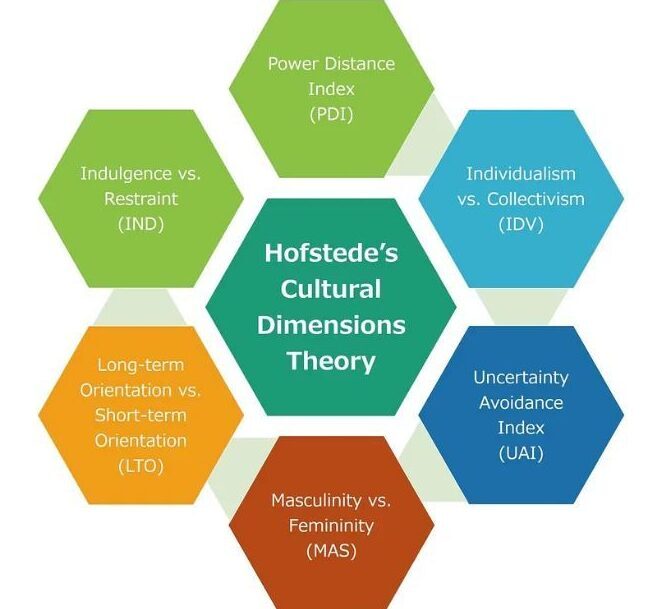
Besides this, you can also take Hofstede’s six cultural dimensions into account. These dimensions evaluate in broad categories what makes different cultures similar and different. The most obvious and well documented one is the individualism-collectivism spectrum. But also, expectations regarding restraint as opposed to uninhibited enjoyment and more. By familiarizing yourself with these dimensions, you take a valuable first step into understanding whether and how you need to adjust your marketing strategy to this new market.
No language is universal
Despite our convenient physical location in the Netherlands (at least from a European business standpoint), is the Dutch language itself, all but widely spoken. Just over 25 million people speak the language which is around three Greater-London’s of people. Not a lot, especially from a global perspective. But even languages that are more widely spoken are not one-sized-fits-all. The most obvious examples are the intricacies between British and American English, but also the Spanish and Portuguese spoken on the European continent versus in Central and South America. Or how about the various mutually unintelligible dialects in Arabic and Chinese? No business wants to make a typo in their promotional copy due to it coming across as unprofessional, but how about using outdated terms or, worse, an expression that isn’t used at all? Deciding to translate your marketing copy to a different language is a great first step in bridging a communication gap and making sure your presence on the market feels natural and maybe even familiar, so not treating said language with the localized nuance it deserves, would inhibit your potential success when it matters most.
Know your audience
Even though taking the six cultural dimensions of Hofstede into account, it, of course, is not the whole story. What is culture after all without individual people? Which communities buy your product and why? And how can you best serve them? Do diligent research and try to get detailed profiles of your customers along with their motivations and wishes. By adequately segmenting your audience and adjusting your message and USP’s according to these differing needs, people understand your place on the market much quicker. Which will magnify the positive effects of your localization campaign.
The battle for visibility is no longer (just) on Google
Every marketeer knows how fickle a campaign can be. A tactic that worked fine 6 months ago might not do you any favors tomorrow. A society is always changing after all, sometimes just in “what” we consider important and what not, but also often on “how” we go about something. and your strategy needs to reflect that. The introduction and large-scale application of AI is an example of the “how”. Those who (still) only optimise for Google search results are missing a piece of the puzzle and might unknowingly miss out on online visibility.
Especially the younger generation is diversifying which resources they consider a search engine. A smartphone is used the majority of the time by these groups and apps like TIkTok and AI apps like ChatGPT are used besides Google to answer their questions. Taking this into account is a golden opportunity for a company entering a foreign market who is building their local visibility.
Furthermore, we see that advertising on social media is becoming more and more saturated. What is the added value of being one of the millions of corporate accounts promoting your services? Compare this with a physical market: if every stand is loudly promoting their newest deal, there’s a whole lot of noise, but no one really stands out. One can’t help but notice the writing on the wall: will online marketing stay as dominant as expected, or do we need to anticipate more offline tactics to stay top of mind? We’re reminded of this successful offline guerilla campaign organized to promote the AppleTV show Severance. Will this be the way forward for companies who want to stand out? This doesn’t mean that you need to delete your social media business accounts tomorrow. Simply look into opportunities to diversify your content and include both offline campaigns and AEO (answer engine optimization) enhancing tactics in those strategies.
Client expectations and desires are subject to change
in addition to our previous tip, we also want to mention that expectations and annoyances of consumers are subject to change.One example of this happened during Covid-19. Physical locations were largely closed, so a lot of companies increased their online presence. Being funny and entertaining was a priority in these online interactions. Social media admins gave their takes on memes, news developments and trends. This casual relationship between company and consumer was received well initially, with online creators almost being starstruck whenever they found a large corporation with a sassy remark in their comments. The tide, however, has shifted. People have largely gotten over this attitude, and demand proper customer service, affordable pricing and accountability over jokes instead. Companies trying to be an online class clown in 2026 get confronted with “shut up brand” responses and similar sentiments.
We’ve arrived at the end of this blog. Which development did you find most surprising? And which one did you already secretly suspect? We hope you enjoyed this blog and feel more assured and empowered to take the next step with your company. For help with translation and international positioning, we are happy to collaborate. As localisation professionals with a vast network of native translators, we are able to guarantee qualitative translations at economical rates. Avoid miscommunication and ineffective marketing in a (new) market by enlisting Translation agency Perfect for your translations.

It's our pleasure to help you with your business translations
We help both small and large businesses and organisations to achieve their potential on an international scale every day. We assist you and gladly offer advice regarding the translation possibilities. Are you interested? Request a risk-free quote!
Request a risk-free quoteRelated blogs
Back to overview