
Whether you simply want to impress the locals on your next holiday, have met someone special abroad or want to expand your business to a different shore. Regardless of the reason, sometimes, learning a new language can be a valuable asset in your skillset. But how do you actually learn a new language as an adult? In case you, the reader, are bilingual, we have the following question: did you remember the moment where your second language definitively “clicked?’ Probably not, and this is because the most valuable language acquisition usually is more passive in nature. In the following blog we give 5 tips to become just as fluent in a new language as the one(s) you already speak.
Make language learning a habit
A. Download a good app
Anyone who wanted to learn a language a decade or two ago had to book an in-person lesson with at least ten other students (and a steep participation fee). Nowadays this is no longer necessary, thanks to a plethora of language learning apps. In fact, learning a new language has never been as accessible as now, but that doesn’t automatically make the process easier. App stores in 2026 have hundreds of options to choose from, and they all promise that their app (along with their premium plan of course) are the missing puzzle piece to fluency. But is paying for an app as valuable as buying language course material? Which of the hundred options are you going with, and what is your preferred learning style to begin with? What in our opinion differentiates a good app from a bad one is the amount of different learning techniques included. Are you just answering multiple choice questions or are there also instances where you have to type the answer yourself or complete a pronunciation test? Make sure that if you’re paying for a language learning app that the course has enough vocabulary to carry you to a conversational level along with a diverse array of testing methods.B. Plan a daily session (and stick to it)
The idea behind gamification is simple: to make sticking to a habit more enticing it needs to be fun and accessible. It is no coincidence that most language apps have some sort of streak tracking to incentivise their users into coming back daily. The daily lessons can be completed in a few minutes and are filled to the brim with positive reinforcement. The downside however, is that these lessons don’t invite users to go deeper into the material, they are “saving their streaks” by answering a few multiple-choice questions and go on with their day. How many people do you know after all that have been “learning” a language for years and have streaks with impressive numbers only to barely be able to get out a sentence or two when unexpectantly faced with the language? This is why you need to be intentional with your language learning process. Reserve some space in your planner if you must. These sessions don’t have to be long; 15 minutes is usually sufficient if you are practicing daily. Just make sure you are challenging yourself in more ways than one to make sure that what you are learning actually sticks.C. Determine specific goals
When do you want to be able to say what? Is there a specific date or season where you want to get to a specific level or want to be able to talk about a certain niche? By making these goals as clear as possible, you can approach your process in a targeted manner. Which can make it more motivating. Getting to a conversational level in any language can take hundreds if not thousands of hours, so finding ways to make the process more motivating and fun yet challenging is what will distinguish you from surface level learners and make sure you actually get to an intermediate and maybe even fluent level. Set small goals with deadlines to ensure your learning stays on track and productive.Below are a few examples of smaller goals one can have at different points in their learning process. These examples mostly serve as inspiration. Feel free to tailor your own list to your needs and interests.
After 1 month i want to be able to: Introduce myself Say which country i am from Say how long i have been learning the language Ask for help Thank someone in different contexts Ask where i can find something Count to 50 After 2 months i want to be able to: Order food and drinks in a restaurant (and answer questions from staff) Talk about my hobbies Plan a hangout with friends Give my phone number to someone Do my first pronunciation tests Know the adjectives i use the most Write, write, write
A. buy a notebook to track your progress
The ideal opportunity to finally put that pretty notebook you bought five years ago to use. By writing down as much as possible, you not only have a memento of your language learning process perfectly tailored to what you want to learn and remember, you also have a tool that can help you out when that word is on the tip of your tongue without whipping out your phone. Practice actually writing the new characters especially when you are learning a language with a different writing system, write down words and sentences you want to remember, note relevant mnemonics and create a knowledge tool perfectly suited to your interests. Don't know where to start? Here’s a few ideas belowB. Analyse lyrics to your favourite songs in your target language
Do you have a favourite artist or actor who happens to sing/rap/act in your target language? Do you have a favourite song or movie and what is being said? Write it down and try to analyse how the language works. Can you recognise a pattern in word order, conjugation, and more? This is a fun way to learn with material you already like.C. Write down real-life examples (if possible)
Is there already a community that speaks your target language in your country/city? Think of for example a China Town in most major cities when you are learning Chinese. Go visit these areas and look at shop signs, ads, and posters. Write them down and try to decipher them. Try talking with someone whose first language is your target language and practice with them. If you have the budget, you can also book a trip to a country that speaks your target language. After all there's no point in memorizing all your study material if you can't apply it in real life situations. Just learning from a book can make the language you use sound slightly unnatural and not a true reflection of how natives actually communicate. Lots of cultural nuances never make it to a study book which means you have to learn them as you go by striking up conversation with locals (as terrifying as it may be). For example, French people are known for not pronouncing whole syllables for convenience (j’sais pas instead of je ne sais pas). Going out of your way to have these kinds of interactions and transcribing them in your notebook is extremely valuable for your process since it teaches you how to use the language in a more intuitive manner.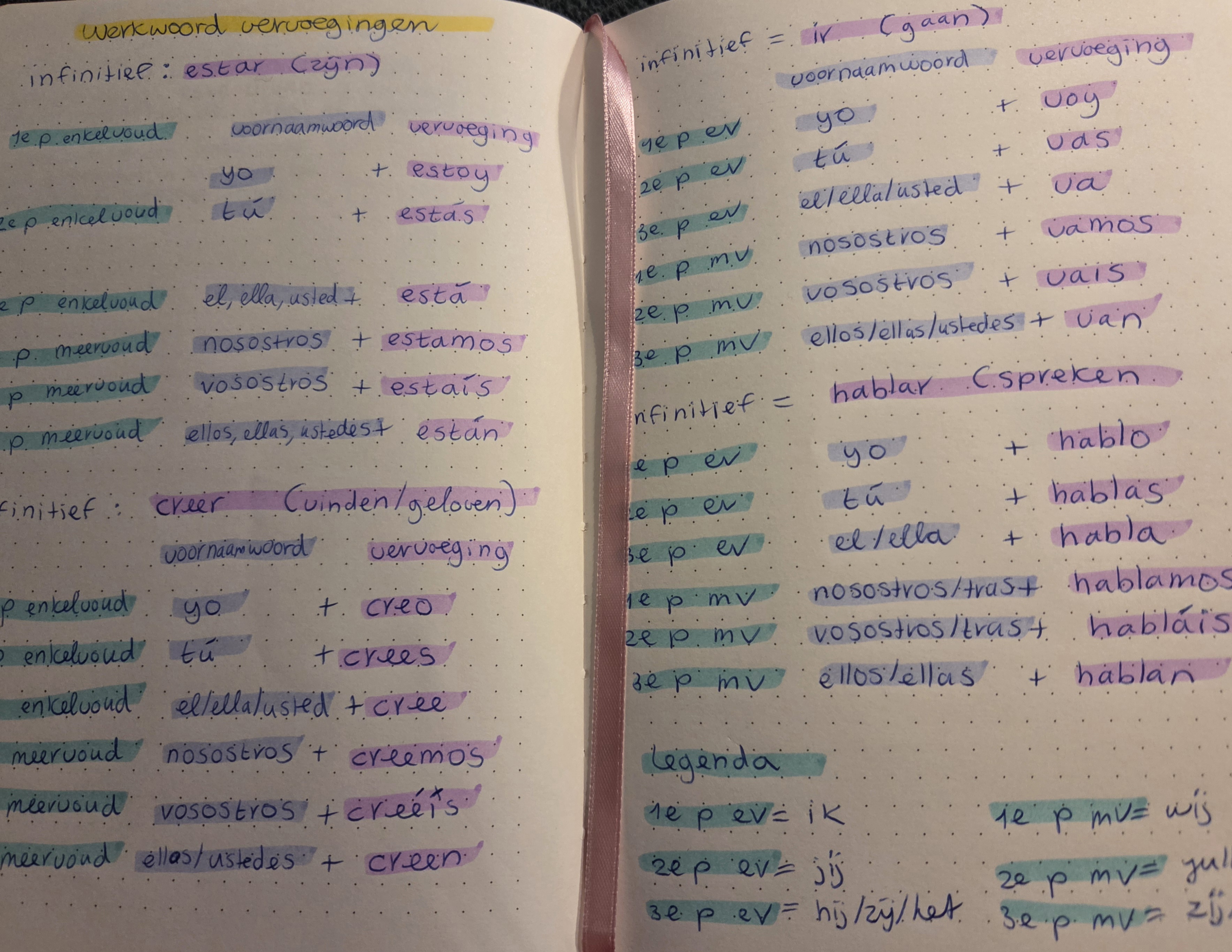
Learn like a child would (yes, really)
Even though it is true that learning a language as an adult is more challenging than as a child, that doesn't mean that is the whole story. Yes, our brains are more pliable and essentially work as sponges in childhood. But said children can also learn the language at their own pace, whilst being encouraged every step of the way by people around them who speak slowly and clearly, whereas an adult is expected to "just do it" on their own behind their desk without issue. So be patient with yourself, getting frustrated and talking down to yourself when you hit a dud in your process is not going to get you anywhere. Instead, replicate tactics that work for children like, for example, surrounding yourself with the language and trying to repeat it out loud and more.
A. Distribute sticky notes around your living space
Does trying to memorise word lists get tired quickly? Write the most important words on sticky notes and distribute them around your living space. Words concerning food and drink: put it on the fridge, words concerning rooms and specifics: put sticky notes in those rooms. This way you keep passively perceiving these words outside lessons, ensuring that you actually remember them.B. Watch cartoons and movies made for children
Watch Dora the Explorer/Spongebob or equivalent in your target language. Yes, really. Media that has children or teens as their audience usually are easier and clearer vocab wise by design. Since you are starting from zero as well, it is an excellent way to cover the basics. LingoPie offers exactly this and is a great resource we recommend for learning whilst watching.C. Read news written for children/teens
When you have watched enough children's shows, you can progress to reading slightly more challenging news articles geared towards teens/young adults. This way you are still in that sweet spot where accessible language is prioritised while at the same time progressing in your language level. And of course, you also learn from real life developments and examples which you in turn can write down in your notebook.Combine multiple learning strategies and techniques
A. Use all of your senses
Learning a language is so much more than simply memorising word lists in your study book. The more you literally immerse yourself in the language, the faster you get to a practical level. Listen to music and watch movies in the language, follow native speakers on social media, set your smartphone to your target language, and make flashcards. Fill in the last gaps with a good language app that tests your knowledge in multiple ways. And if possible, of course, do all of these tactics at once.B. Don't neglect active recall
This is something that is unfortunately missing from most language apps in our opinion. With active recall you don’t get possible answers or words in a sentence to rearrange, but instead have to come up with the answer and write it down yourself. This is one of the best ways to permanently take in vocab. A great resource for active recall is Clozemaster. Even with a free account you can do 10 minutes of high-quality learning that pales in comparison to passively reviewing your notes or taking a multiple-choice quiz.Make immersion effortless
A. Let subtitles help you along
Just watching subtitled content may be a great way to passively take in a language, but won't get you to where you want to go in your language journey unless you find ways to challenge yourself while watching. Practice your comprehension by temporarily turning off subtitles and writing down what you hear. Or pause when a character finishes talking and try to predict how the other character will respond. Do take note that by doing this you of course make the watching experience itself less entertaining. So, picking a movie or show you’ve already seen (but haven't memorized completely) is probably best in this case. Not at the point yet where you can depend on your listening skills? Install a dual subtitle extension to first get used to how words are pronounced and spelled.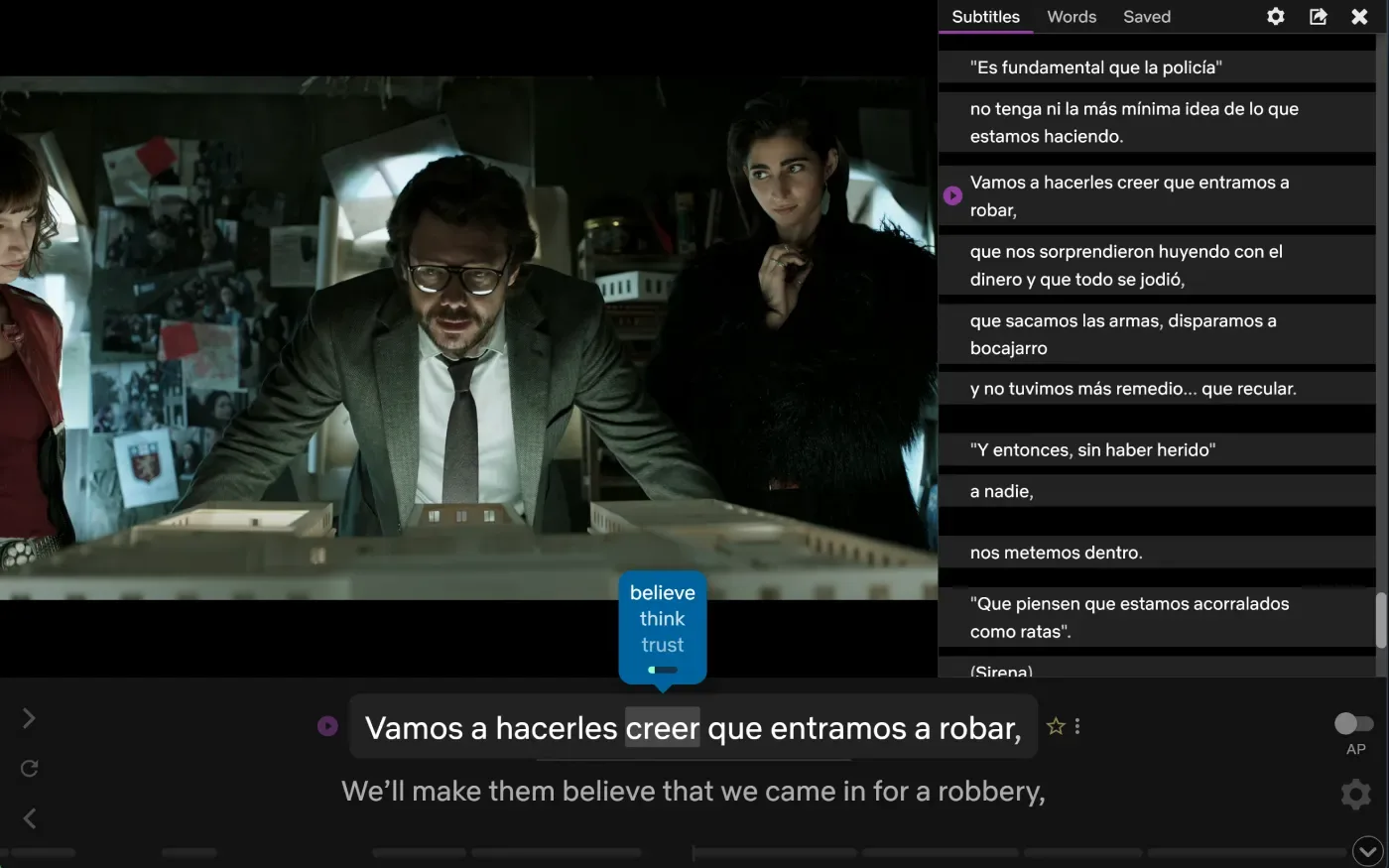
B. Listen to music in your target language
As mentioned before, immersion is the way to go. One of the easiest ways to do this without immediately traveling to a different country is by consuming media in your target language. Find an artist who creates music or other forms of storytelling and make their work a fixed part of your day. This way you can get used to the intricacies of a language more quickly.C. Set your phone to your target language and follow native speakers online for current language examples
Even though we would never disadvise anyone to purchase a study book, especially since it’s a valuable tool for grammar and other structural information. One of the weaknesses of study books, however, is that they’re a snapshot of a language at the moment of publishing, whilst language is always evolving and changing. Which is something you simply can't always capture in a study book. This is why it is important to also watch media, read content and talk with real people (whether it be on social media or in public). To stay up to date with new words, idioms and phrases and learn within context how to apply them naturally in an interaction. To take a final step towards complete immersion, set all your smart devices to the language you are learning.We never said it was going to be easy, but as a professional translation agency quite literally working with languages all day, we are convinced that if you apply above tips consistently it is only a matter of time until you reach a respectable fluency in any language. Until then, we would love to help you with any and all translation requests. Request a risk-free quote for your text and we will let you know what is possible. Which tip did you find most enlightening? We’d love to know.

Learnt the language and ready for the next step?
We help both small and large businesses and organisations to achieve their potential on an international scale every day. We assist you and gladly offer advice regarding the translation possibilities. Are you interested? Request a risk-free quote!
Request a risk-free quoteRelated blogs
Back to overview